Saints Jesuit priest and martyr · 1891–1927 AD
Blessed Miguel Pro
Feast 23 November · Born 1891 AD, Zacatecas, Mexico · Died 1927 AD, Mexico City, Mexico
A mine owner's son who trained for the priesthood in exile, he came home to Mexico City, brought the sacraments in secret when the churches closed, and was shot without trial in 1927 AD with his arms stretched out like a cross.
Begin the life
In brief
Blessed Miguel Pro, commonly known as Father Pro, was a Jesuit priest who brought the sacraments in secret to Mexico City after public worship was suspended in 1926 AD. On November 23, 1927 AD he was shot without trial in the yard of the police headquarters in Mexico City. The Church beatified him as a martyr in 1988 AD.
-
1891–1911 AD
The boy from the mines
A mine owner's son learns the miners' slang, blames the Jesuits when his sisters enter a convent, and then joins them.
Blessed Miguel was born in the state of Zacatecas on January 13, 1891 AD, the eldest son of a mine owner. For a little over five years he worked in his father's mine office, where he could type a hundred words a minute. In his free hours he went down the pit to talk with the miners, and he learned their slang and never lost it.
When two of his sisters entered a convent, he blamed the Jesuits who guided them and swore never to forgive them. He ran off to the hills until his mother found him and talked him into making a retreat. He came home set on becoming a Jesuit, and in August 1911 AD he entered the novitiate at El Llano.
-
1914 AD
Exile
Revolutionary soldiers break up the novitiate, and the young Jesuit leaves his mother for exile.
In August 1914 AD armed soldiers of Carranza's revolutionary army came to the novitiate by night, and the novices scattered in lay dress. Dressed as a farm labourer, Blessed Miguel slipped past the guard posts out of Zamora. His father had been stripped of his property, and his mother, Josefa Juárez, had fled ill and penniless to Guadalajara.
In Guadalajara, after a solemn Mass for the exiles, he left by train with the first group of Jesuit students bound for California. At the station he embraced his mother without shedding a tear. He never saw her again.
“«Estoy contenta de haberlo dejado todo por la causa de Cristo, ahora no me queda más que esta imagen del Sagrado Corazón, que bendecirá mi casa y mis hijos.» (I am happy to have kept nothing but that and to have left everything for Christ. Nothing now remains but the picture of the Sacred Heart who will bless my house and children!)”
Josefa Juárez, his mother to a Mexican Jesuit, a companion of her son, 1914 AD -
1915–1925 AD
A priest far from home
Years of study in four countries lead to an ordination his mother cannot attend.
Exiled from Mexico, Blessed Miguel continued his training in California, Spain, Nicaragua and Belgium. In the influenza of 1919 AD he nursed the sick in his community day and night for fifteen days, until he fell ill himself. A stomach illness that began at El Llano stayed with him, and he hid it behind his cheerfulness.
At the end of August 1925 AD he was ordained a priest at Enghien, in Belgium. His mother was not there, and when the other new priests embraced their families he went to the sacristy and wept.
““On the day of my ordination, I merely asked Our Lord to be useful to souls.’’”
Blessed Miguel Pro to a friend, remembering his prayer on the day of his ordination -
1925–1926 AD
Three operations and a death
The new priest spends months in hospital, loses his mother, and is called home.
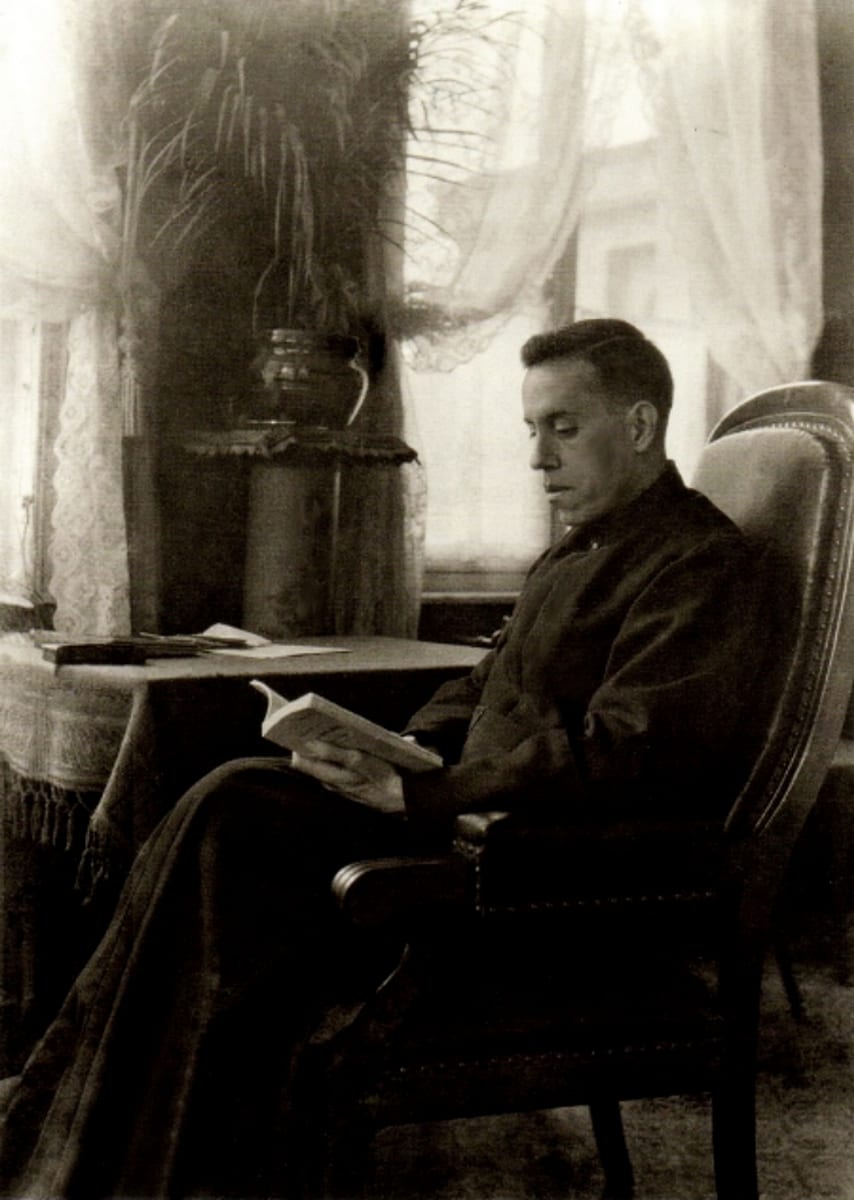
Miguel Pro reading, Belgium, December 1925 AD Archives of the New Orleans Province of the Society of Jesus, Loyola University New Orleans (now at the Jesuit Archives & Research Center, St. Louis), as reproduced in BiCentenario no. 26; via Wikimedia Commons In November 1925 AD Father Pro left Enghien for surgery on his stomach. There were three operations, and the second was done without chloroform. His mother died in Mexico on February 8, 1926 AD, while he was still ill in Belgium.
In the summer of 1926 AD his superiors called him home to Mexico. He sailed home on the liner Cuba, the only priest among its 525 passengers.
““My mother is in heaven. This morning I wished to say Mass for the repose of her soul, but could not pray. I am sure she is in heaven.””
Blessed Miguel Pro, in Provence, after news of his mother's death, 1926 AD -
1926–1927 AD
Communion in secret
With the churches shut, a priest in disguise brings Communion and food across the capital.
A new law took effect on July 31, 1926 AD, and Mexico's bishops answered by suspending all public worship that needed a priest. In the last days before, Father Pro heard confessions from 5:30 in the morning to 11 and from 3 to 8 at night, and twice he was carried out in a faint. He said his last public Mass on July 31, the feast of St. Ignatius of Loyola.
With the churches shut, he set up Communion stations around the city, where he gave about three hundred Communions a day. He moved about in disguise; once, dressed as a mechanic, he preached a retreat to some twenty chauffeurs. He also fed poor families, among them those of persecuted Catholics, and begged for the food himself.
“But instead of lamenting, we have uncontrollable fits of laughter. What good luck to go to Heaven for so noble a cause!”
Blessed Miguel Pro to a friend, in a letter of 25 May 1927, May 25, 1927 AD -
November 1927 AD
Accused of a bombing
After an attack on the president-elect, the police seize Blessed Miguel Pro and his two brothers, and the President condemns the priest without trial.
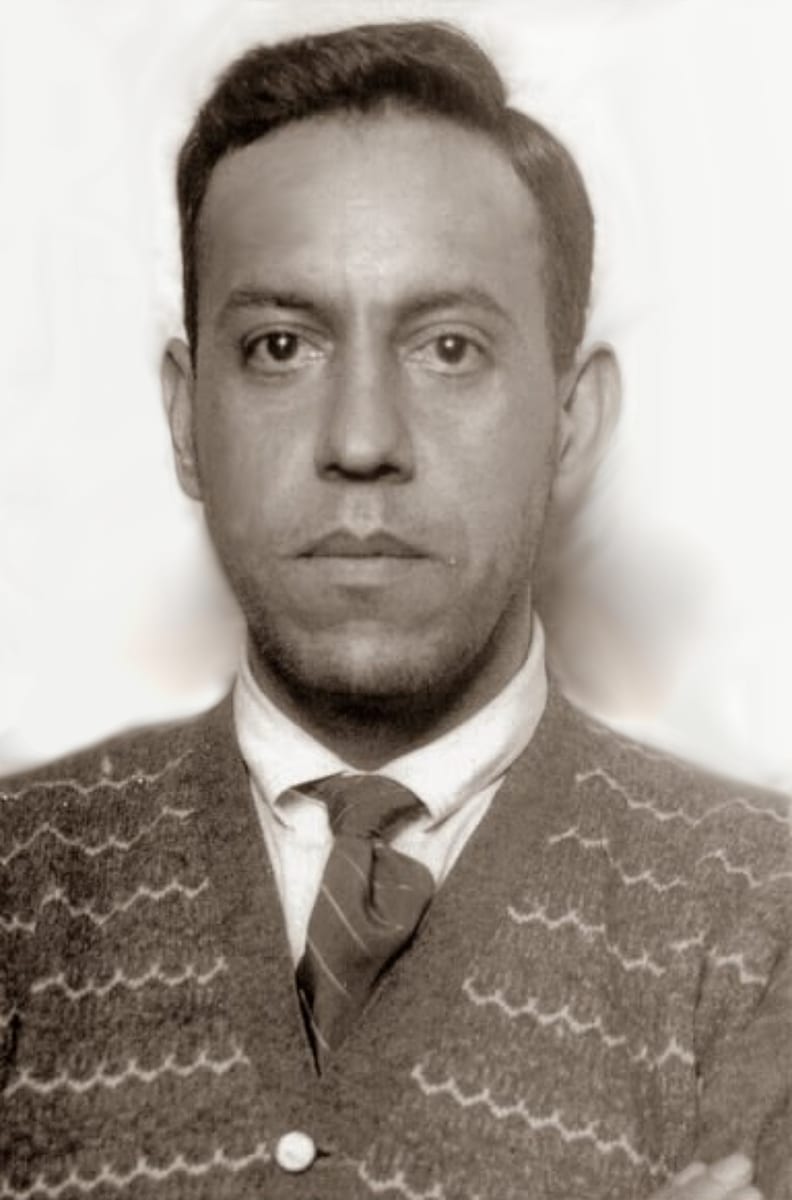
Father Miguel Pro at the police inspection, Mexico City, the day before his death, November 22, 1927 AD Wikimedia Commons (source of the scan not stated) In November 1927 AD a bomb was thrown at the car of General Álvaro Obregón, the president-elect, in the Chapultepec woods, and he escaped. Before dawn on November 18 police burst in on Father Pro and his brothers Humberto and Roberto. Father Pro heard Humberto's confession in a corner of the room before they were taken.
General Roberto Cruz, the police chief, told the press that the prisoners had confessed to the plot. All three brothers swore they had no part in it, and Cruz's secretary told a lawyer there was no proof against them. Pope St. John Paul II's apostolic letter records that Father Pro was unjustly accused and condemned to death by President Calles without ever being brought to trial.
“From this moment let us offer our lives to God for the Church in Mexico, and let us do it, all three, in such a way that God may accept the sacrifice.”
Blessed Miguel Pro to his brothers Humberto and Roberto, November 18, 1927 AD -
November 23, 1927 AD
Arms out like a cross
Called from his cell, the priest kneels, prays and faces the firing squad standing.
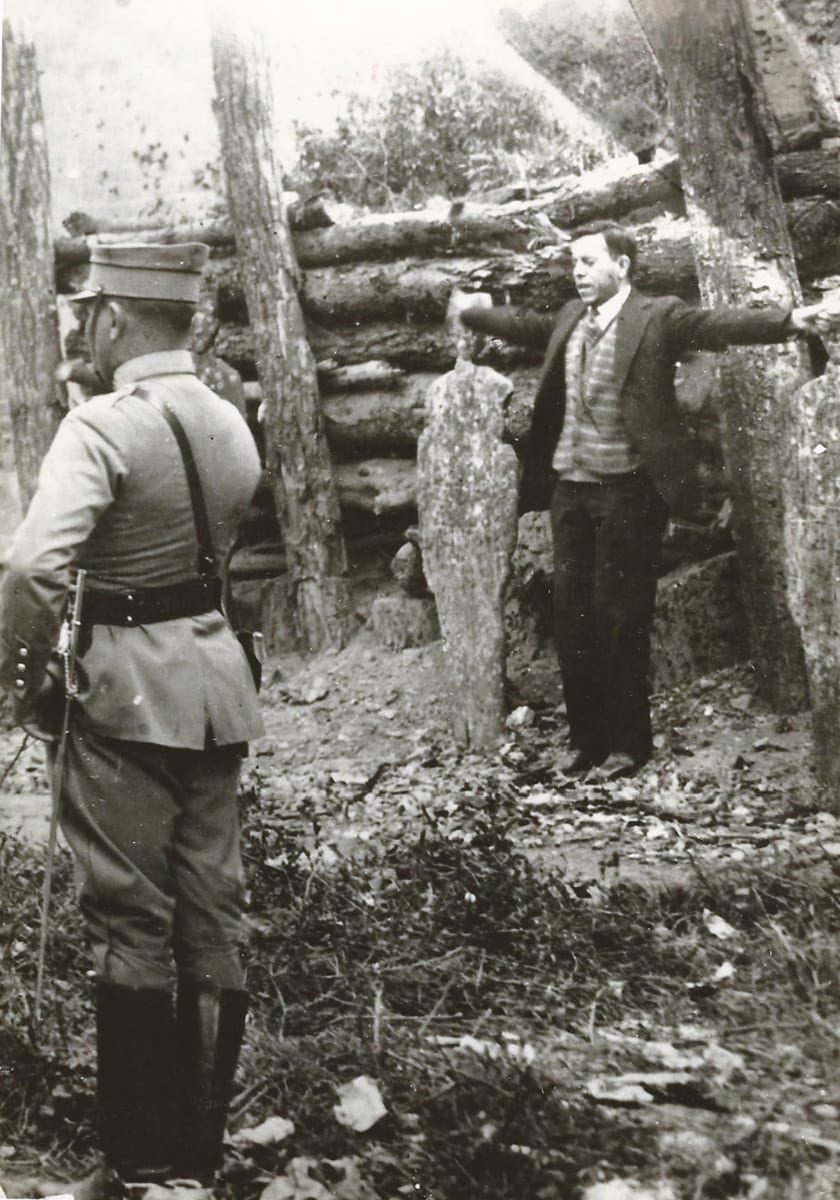
Miguel Agustín Pro (1891-1927 AD) held his arms out in imitation of the crucified Christ, Unknown press photographer Unknown press photographer, Wikimedia Commons That morning the papers carried the police chief's announcement that the prisoners would be tried that day. At about 10:20 a gendarme came down to the cells and called Father Pro's name. In the yard, before soldiers, officials and press photographers, Major Torres, the officer of the firing squad, asked his last wish, and Father Pro asked to pray.
He knelt and kissed his crucifix, then refused the blindfold and stood against the stockade with his arms stretched out like a cross. At the command to fire he cried out *Viva Cristo Rey* (*Long live Christ the King*), and fell. Further volleys killed Humberto and the two other condemned men. A reprieve won from Calles came too late for them, but it spared Roberto at the last moment.
“¡Viva CRISTO REY (Long Live Christ the King!)”
Blessed Miguel Pro to the firing squad and those present, November 23, 1927 AD -
1927–1988 AD
Mourned, then beatified
Thousands of workers and soldiers come to the family home to see the body of Blessed Miguel Pro.
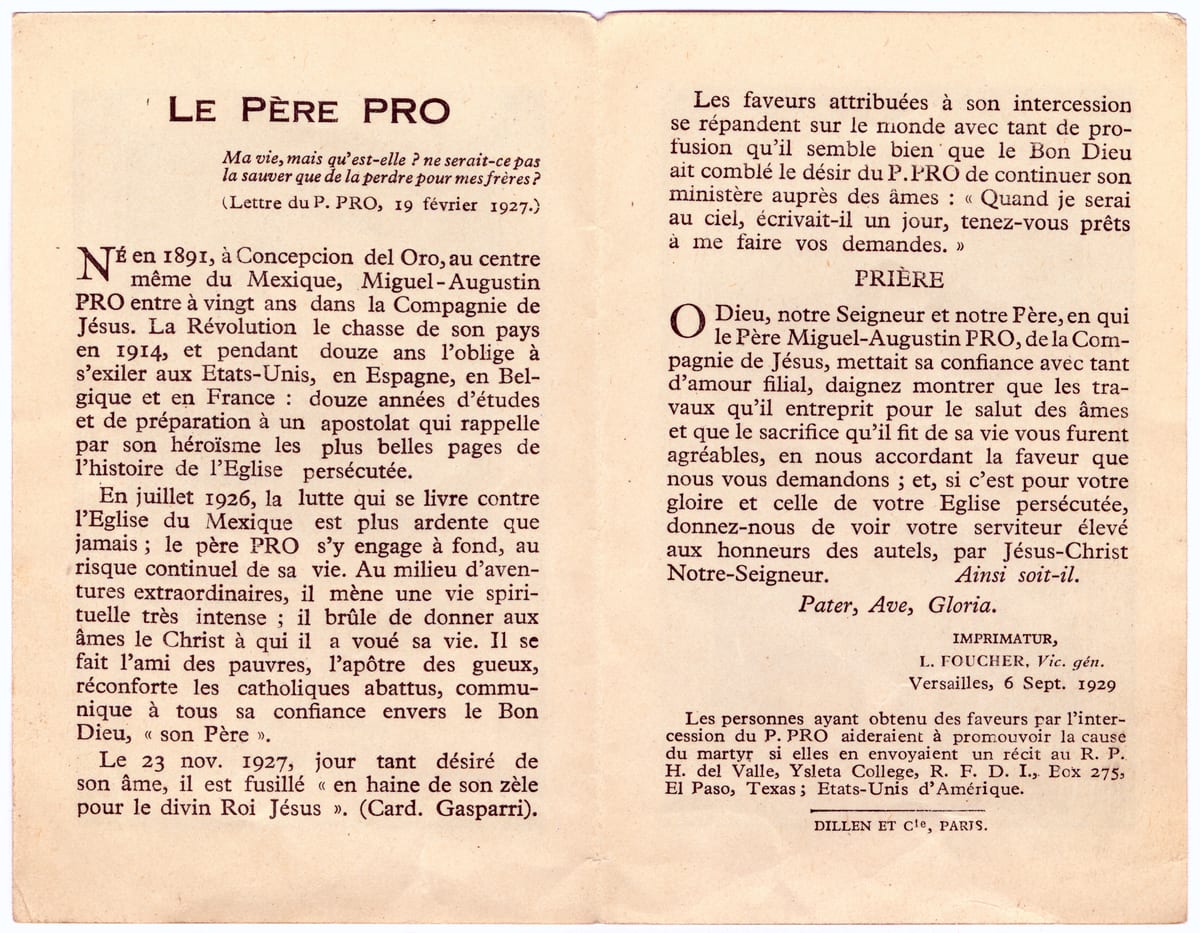
"Le Père Pro": memorial holy card with a prayer for his beatification, Dillen et Cie., Paris, 1929 AD Dillen et Cie., Paris, MAS Museum aan de Stroom, Antwerp (dams.antwerpen.be asset lUXLYLUNHNWlXjWJZYrj5izj), via Wikimedia Commons His father received the body and kissed his son's forehead without a tear. Thousands of workers and soldiers filed past the coffin at the family house. On November 24, 1927 AD, the funeral procession was so long that its rear had not reached the Dolores cemetery four hours after its head arrived.
A decree of November 10, 1986 AD recognised his death as a true martyrdom. Pope St. John Paul II beatified him in St. Peter's Square on September 25, 1988 AD, and set his feast on November 23, the day of his death. The next day the Pope told the Mexican pilgrims that their Church had a new intercessor in heaven.
“Miguel was an apostle; Humberto was an angel all through life. They died for God; with Him they already rejoice in Heaven!”
Miguel Pro (his father) to friends who came to offer sympathy, in the mortuary chapel, November 23, 1927 AD


.jpg)
.jpg)
_held_his_arms_out_in_imitation_of_the_crucified_Christ.jpg)
Pray with the Church
Prayer to the Sacred Heart
A prayer of Father Pro's, as Dragon prints it in his English translation.
Heart of Jesus, I love Thee, but increase my love;Heart of Jesus, I trust in Thee, but strengthen my hope;Heart of Jesus, I give Thee my heart, but sink it so deeply in Thine that it will never break away;Heart of Jesus, I am all Thine, but keep my promise that I may redeem it unto the utter sacrifice of my life.
All 2 reports on Blessed Miguel Pro

Miguel Pro reaches California exile a week after last seeing his mother
