
Saints Foundress of the Missionaries of Charity · 1910–1997 AD
Saint Teresa of Calcutta
Feast 5 September · Born 1910 AD, Skopje (then in the Ottoman Empire; now North Macedonia) · Died 1997 AD, Mother House of the Missionaries of Charity, Calcutta (Kolkata), India
The youngest child of a Skopje merchant, she taught girls in Calcutta for years, walked out of her convent in a white sari to serve the poorest in the streets, and built a congregation across the world while living with a hidden darkness until she died among her sisters in 1997 AD.
Begin the life
In brief
Saint Teresa of Calcutta was born Agnes Gonxha Bojaxhiu in Skopje in 1910 AD and spent her working life in Calcutta, now Kolkata. In 1950 AD she founded the Missionaries of Charity there to serve the poorest of the poor. She died in 1997 AD, and Pope Francis declared her a saint on September 4, 2016 AD.
-
1910–1928 AD
A merchant's daughter in Skopje
The youngest child of an Albanian Catholic family loses her father at about eight and leaves home at eighteen to become a missionary.
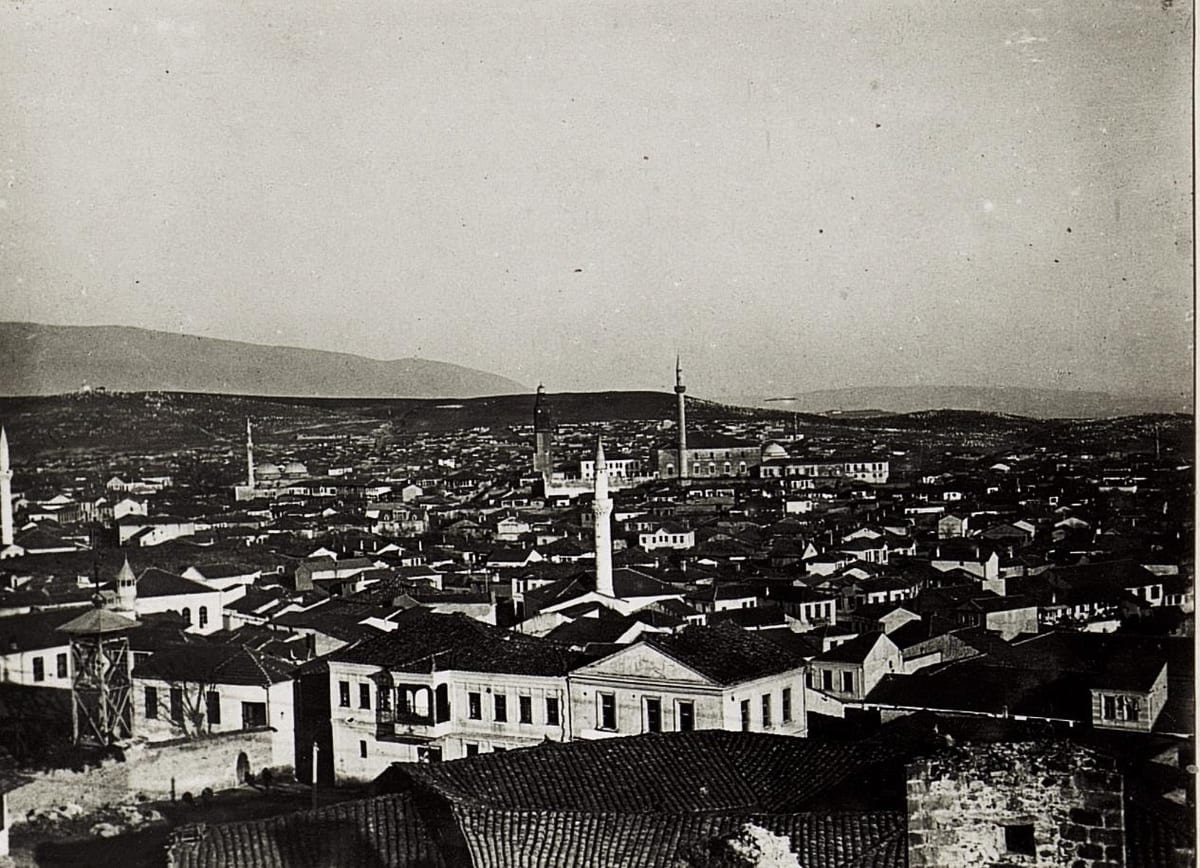
Gesamtansicht der Stadt. (BildID 15576320), K.u.k. Kriegspressequartier, Lichtbildstelle - Wien, between 1914 AD and 1918 AD K.u.k. Kriegspressequartier, Lichtbildstelle - Wien, Österreichische Nationalbibliothek, Bildarchiv Austria (via Wikimedia Commons) Gonxha Bojaxhiu was born in Skopje on August 26, 1910 AD, the youngest of five children of Albanian parents. Her father, Nikola Bojaxhiu, a merchant, died suddenly in 1918 AD and left the family short of money. Her mother raised the three surviving children alone and gave them a solid grounding in the Catholic faith.
As a girl she sang in the choir of the Jesuit parish of the Sacred Heart and belonged to its mission group. In September 1928 AD, at eighteen, she left home to join the Sisters of Loreto in Ireland, meaning to serve in India.
“By blood, I am Albanian. By citizenship, an Indian. By faith, I am a Catholic nun. As to my calling, I belong to the world. As to my heart, I belong entirely to the Heart of Jesus.”
St. Teresa of Calcutta, describing herself -
1928–1946 AD
A teacher in Calcutta
She joins the Sisters of Loreto, takes the name Teresa and spends her young life teaching girls at a convent school in India.
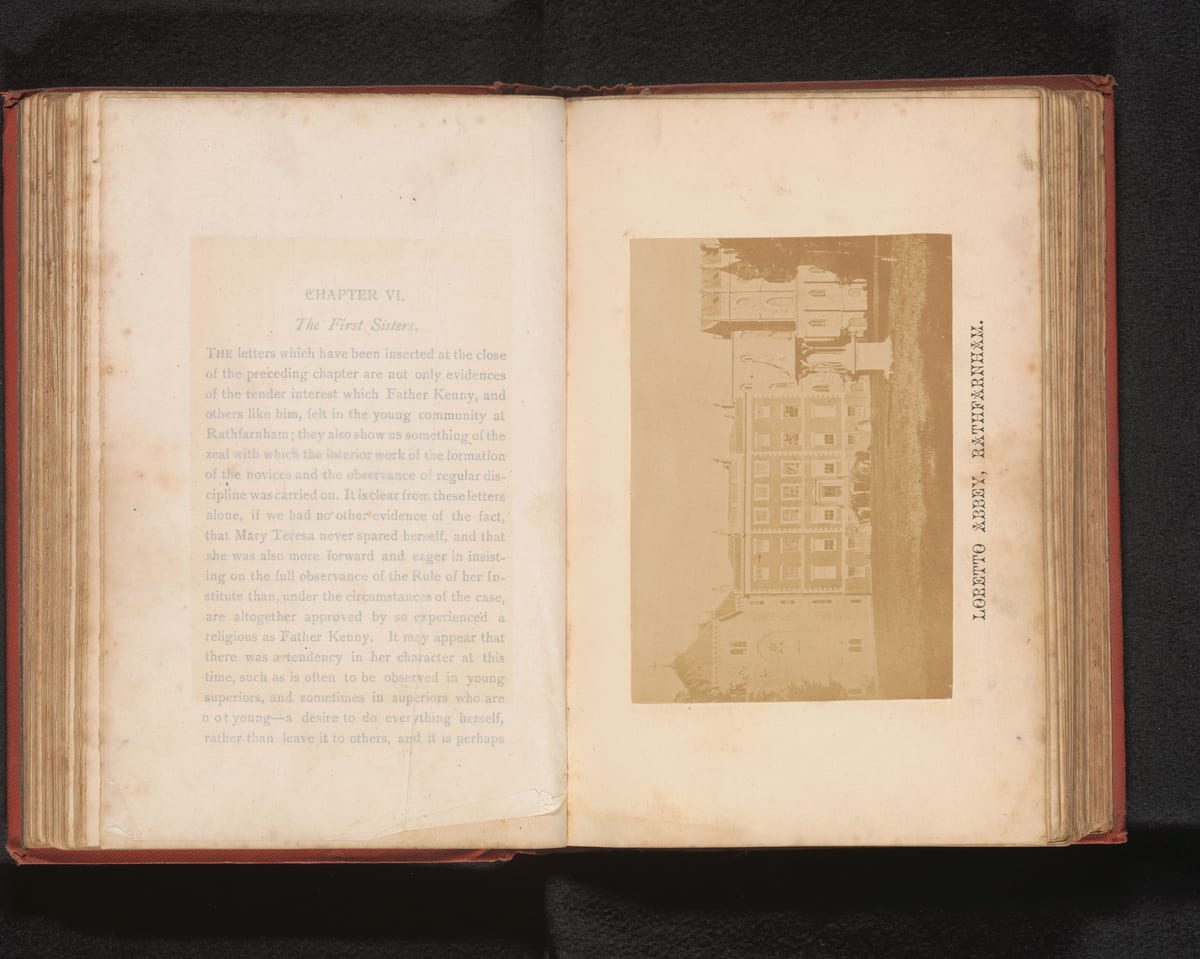
Voorgevel van Loreto Abbey te Rathfarnham, anonymous photographer, circa 1871 AD - in or before 1881 AD anonymous photographer, Rijksmuseum, Amsterdam (RP-F-2001-7-377-3) Gonxha Bojaxhiu was received as a postulant at the Loreto convent at Rathfarnham, near Dublin, in October 1928 AD. She received the religious name Sister Teresa and chose St. Thérèse of Lisieux as her patron. Sister Teresa reached Calcutta on January 6, 1929 AD.
After two years as a novice in Darjeeling, she made her first vows in May 1931 AD and was sent to teach at St. Mary's, a Bengali-language school for girls at Entally in Calcutta. She made her final vows on May 24, 1937 AD and was called Mother Teresa from then on, and in 1944 AD she became the school's principal. Her years in Loreto were deeply happy, though she was somewhat fragile and often unwell.
-
1946–1948 AD
A call on the Darjeeling train
On a train journey she receives a second calling, and after two years of waiting she leaves her convent to serve the poor.
On September 10, 1946 AD, on the train from Calcutta to Darjeeling for her yearly retreat, Mother Teresa received a call: to serve Christ in the poorest of the poor. By her own account, over the next months she heard what she understood to be Jesus speaking within her, asking her to found a new community of sisters to serve the poorest. She wrote later that she feared she was being deceived, and she took the matter to her spiritual director and to Archbishop Ferdinand Périer of Calcutta.
Her spiritual director told her that it was Jesus who was asking. Archbishop Périer weighed the request for nearly two years, and in 1947 AD her superiors sent her to Asansol in the meantime. With the approval of the archbishop and the permission of the Holy See, she left the Loreto convent at Entally in August 1948 AD, dressed for the first time in a white sari with a blue border.
“Come be My light. I cannot go alone.”
Christ to St. Teresa of Calcutta, in the interior locutions after the call of 1946, 1946 AD -
1948–1950 AD
The first days in the slums
Mother Teresa goes into the Motijhil slum with a rosary in her hand to nurse the sick and teach street children. Her former pupils join her, and in 1950 AD the archbishop makes them a congregation.
After a short course of medical training with the Medical Mission Sisters at Patna, Mother Teresa came back to Calcutta in December 1948 AD and lodged with the Little Sisters of the Poor. On December 21 she went into the slums for the first time. She visited the sick, gathered street children to teach them, and opened her first school and a dispensary in the Motijhil slum.
Each day began with the Eucharist, and then she went out with a rosary in her hand. After some months her former pupils began to join her, one by one. On October 7, 1950 AD, in a small chapel at 14 Creek Lane, Archbishop Périer established them as a congregation of the archdiocese, the Missionaries of Charity.
“to quench the infinite thirst of Jesus Christ on the Cross for love of souls... by labouring at the salvation and sanctification of the poorest of the poor”
St. Teresa of Calcutta, in her Letter of the Foundress, on the purpose of the Missionaries of Charity -
1952–1957 AD
A home for the dying at Kalighat
Mother Teresa opens Nirmal Hriday, a house for people dying in the streets of Calcutta, and later a home for abandoned children.
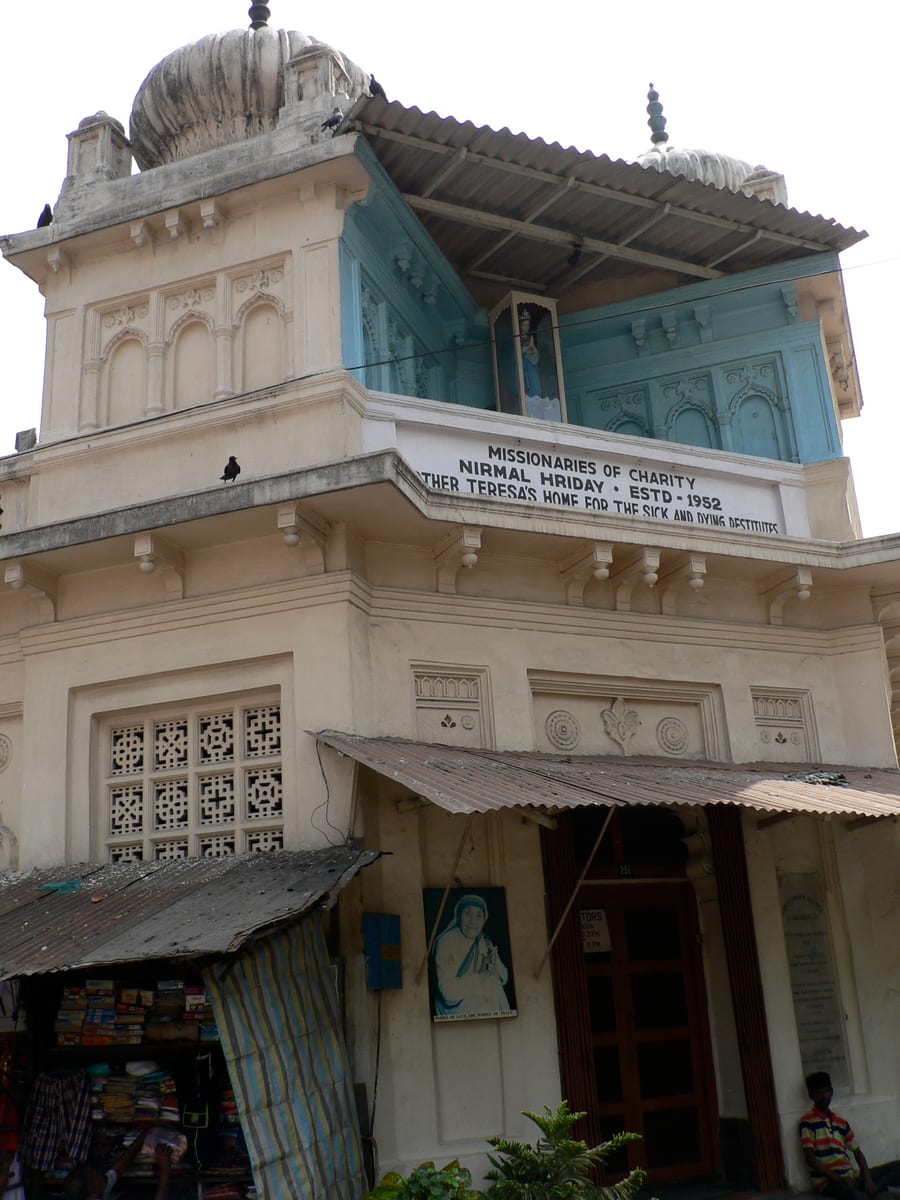
Nirmal Hriday facade, thotfulspot (Flickr), March 1, 2007 AD thotfulspot (Flickr), Flickr, via Wikimedia Commons In the early 1950s AD Mother Teresa found many people dying in the streets of Calcutta. Hospitals often refused them as beyond medical help. On August 22, 1952 AD, the feast of the Immaculate Heart of Mary, she opened Nirmal Hriday at Kalighat, a house where people dying in the street could be nursed back to health or die with someone caring for them.
She opened Shishu Bhavan, a home for abandoned children, in 1955 AD, and began work among people with leprosy in 1957 AD. By 1979 AD more than 36,000 people had been brought to Nirmal Hriday from the streets.
“First of all we want to make them feel that they are wanted, we want them to know that there are people who really love them, who really want them, at least for the few hours that they have to live, to know human and divine love. That they too may know that they are the children of God, and that they are not forgotten and they are loved and cared about…”
St. Teresa of Calcutta, on the purpose of her homes for the dying and abandoned -
From about 1949 AD
The darkness
While the work grows, she lives for decades with a painful sense that God is absent, and tells almost no one.
From about 1949 AD, as the work in the streets was beginning, Mother Teresa lived with a painful sense that God was absent and had rejected her. She called it the darkness, and she hid it even from the people closest to her. It lasted to the end of her life.
In 1960 AD she described the darkness in a letter to Father Joseph Neuner and offered it to God. Pope St. John Paul II said at her beatification that in her darkest hours she held on even harder to prayer before the Blessed Sacrament. The Church now reads that letter in the Office of Readings on her feast.
“My heart and soul and body belong only to God—that he has thrown away as unwanted the child of his Love. And to this, Father, I have made that resolution in this retreat: To be at his disposal. Let him do with me whatever he wants, as he wants, for as long as he wants. If my darkness is light to some soul—even if it be nothing to nobody—I am perfectly happy to be God’s flower of the field.”
St. Teresa of Calcutta to Father Joseph Neuner, in a letter, about 1960, during a retreat -
1965–1979 AD
The Pope's approval and the Nobel Prize
Her sisters open houses beyond India, and in Oslo she accepts the Nobel Peace Prize with a story about a family in Calcutta.
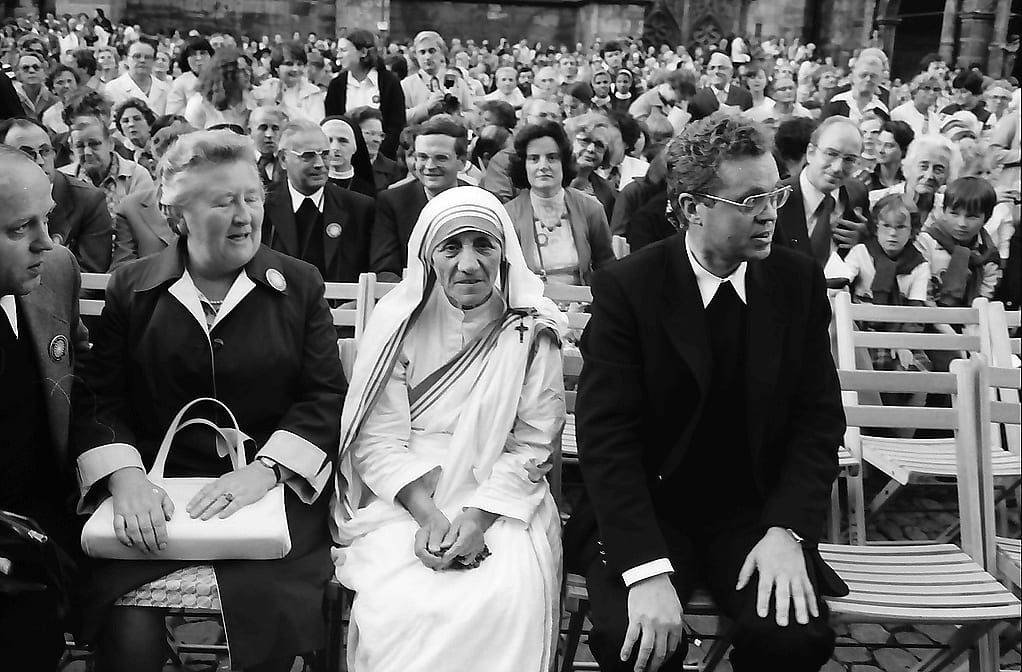
Freiburg: Mutter Teresa (Staatsarchiv Freiburg W 134 AD Nr. 111744a), Willy Pragher, September 1978 AD Willy Pragher, Landesarchiv Baden-Württemberg, Staatsarchiv Freiburg On February 1, 1965 AD, Pope Paul VI raised the Missionaries of Charity from a congregation of the Calcutta archdiocese to one approved by the Holy See. That year her sisters opened their first house outside India, at Cocorote in Venezuela, and houses near Rome and in Tanzania followed in 1968 AD.
Mother Teresa accepted the Nobel Peace Prize in Oslo on December 10, 1979 AD. She told the audience about a Hindu family in Calcutta whose eight children had not eaten for a long time. When she brought them rice, the mother divided it and carried half to the hungry Muslim family next door.
“They are hungry also.”
The mother of a hungry Hindu family to St. Teresa of Calcutta, December 10, 1979 AD -
1997 AD
The last weeks in Calcutta
She hands the congregation to her successor, makes a last journey to Rome and dies at home among her sisters.
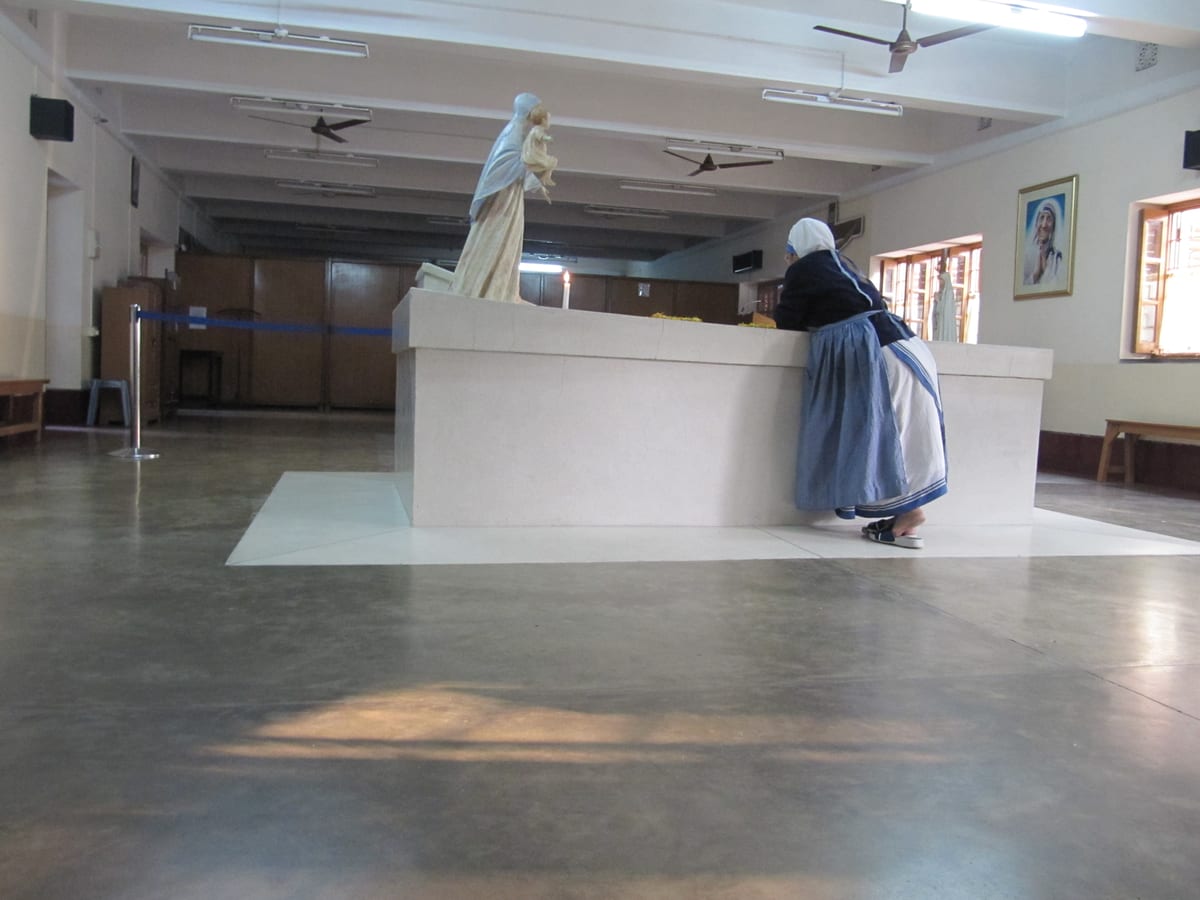
Mother Teresa's Tomb in Kolkata, India, Ryan Hartman, January 27, 2012 AD Ryan Hartman, Wikimedia Commons (own work) In March 1997 AD Mother Teresa blessed Sister Nirmala Joshi, newly elected to lead the Missionaries of Charity after her. She went to Rome to introduce Sister Nirmala to Pope St. John Paul II. After meeting him for the last time, she returned to Calcutta and spent her final weeks receiving visitors and instructing her sisters.
She died on the evening of September 5, 1997 AD, at eighty-seven, in her room at the Mother House, with her sisters around her. Hundreds of thousands of people of every class and religion came to her body in St. Thomas' Church, beside the Loreto convent where she had first arrived in Calcutta. After a state funeral on September 13 she was buried in the Mother House.
“LOVE ONE ANOTHER AS I HAVE LOVED YOU”
The inscription on her tomb, the words of Christ engraved on her tombstone at the Mother House


.jpg)


Pray with the Church
Collect for the Memorial of Saint Teresa of Calcutta
The Collect of her memorial on September 5 from the Roman Missal, in the English translation confirmed by the Holy See on June 24, 2025 AD.
O God, who called the Virgin Saint Teresato respond to the love of your Son thirsting on the Crosswith outstanding charity to the poorest of the poor,grant us, we beseech you, by her intercession,to minister to Christ in our suffering brothers and sisters.Who lives and reigns with you in the unity of the Holy Spirit,God, for ever and ever.