
Saints Layman and martyr of the Cristero War · 1913–1928 AD
Saint José Sánchez del Río
Feast 10 February · Born 1913 AD, Sahuayo, Michoacán, Mexico · Died 1928 AD, Cemetery of Sahuayo, Michoacán, Mexico
A devout boy from Sahuayo in Mexico begged to join the Catholic rising, gave his horse to save his commander, would not be ransomed or renounce his faith, and was killed in his town's cemetery at fourteen.
Begin the life
In brief
Saint José Sánchez del Río, also called Joselito, was a boy from Sahuayo in the Mexican state of Michoacán. He carried the flag for the Cristero forces of his region of Michoacán. On February 10, 1928 AD, at fourteen, he was killed in his town's cemetery because he would not renounce his faith.
-
1913–1926 AD
A boy of Sahuayo
A devout boy grows up in a Michoacán town until the churches close and the Cristero war begins in 1926 AD.
St. José was born at Sahuayo on March 28, 1913 AD, to Macario Sánchez and María del Río. Six days later he was baptised in the town's parish church of Santiago Apóstol. He prayed the rosary every day with his family and went into the fields to hunt doves with a slingshot.
Under a law the president issued on July 2, 1926 AD, every church building belonged to the state, and children could not be taught their religion even in private schools. Mexico's bishops suspended public worship at the end of that July, and the priests of Sahuayo went into hiding. When the Cristero war broke out, his older brothers, Macario and Miguel, joined the Catholic rising.
-
1927 AD
A prayer at a martyr's tomb
After a Catholic lawyer is killed in Guadalajara, the boy prays at his tomb that he too might die a martyr.
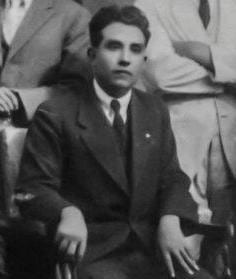
Anacleto González Flores (1919 AD), Unknown photographer Unknown photographer, Wikimedia Commons On April 1, 1927 AD, the young Catholic lawyer Blessed Anacleto González Flores was killed in Guadalajara for opposing the law on religion, and all Sahuayo mourned him. During a short stay by his family in Guadalajara, St. José went to Blessed Anacleto's tomb. He prayed there and asked that he too might die a martyr.
St. José begged his parents again and again to let him follow his brothers into the Cristeros, and in the end they agreed. After he wrote several times to the Cristero general Prudencio Mendoza, he was taken on and became the movement's flag-bearer. In camp he greased the weapons, fried the beans and saw that the horses had water and feed.
“Mamá, nunca ha sido tan fácil ganarse el cielo como ahora (Mother, it has never been so easy to win heaven as it is now.)”
St. José Sánchez del Río to his mother, answering his mother when she opposed his going to fight, 1927 AD -
February 1928 AD
He gives his commander his horse
In a battle near Cotija the boy hands his horse to his commander, is captured, and writes to his mother the same day.
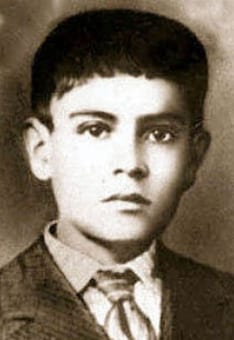
José Sánchez del Río, Unknown photographer, undated (Commons: between 1913 AD and 1928 AD) Unknown photographer, Wikimedia Commons (from josedelrio.org) Early in February 1928 AD, Cristeros fought federal troops near the town of Cotija, and the horse of St. José's commander, Rubén Guízar Morfín, was shot dead. St. José handed Guízar Morfín his own horse so that the commander could get away, though he knew he would be captured and killed for it. He and an older youth named Lázaro were taken prisoner and led to Cotija with their hands tied.
From prison at Cotija that same day, in a letter dated February 6, 1928 AD, St. José wrote to his mother that he expected to die. He asked her to send her blessing with his father's, and to tell his brothers to follow the example of their youngest brother.
“Mi general, aquí está mi caballo. Sálvese usted aunque a mí me maten. Yo no hago falta y usted sí (General, here is my horse. Save yourself, even if they kill me. I am not needed, and you are.)”
St. José Sánchez del Río to Rubén Guízar Morfín, his Cristero commander, February 6, 1928 AD -
February 7–8, 1928 AD
Prisoner in the church of his baptism
Locked in his parish church, now a stable, the boy kills his godfather's fighting cocks kept at the altar and is made to watch his companion hanged.
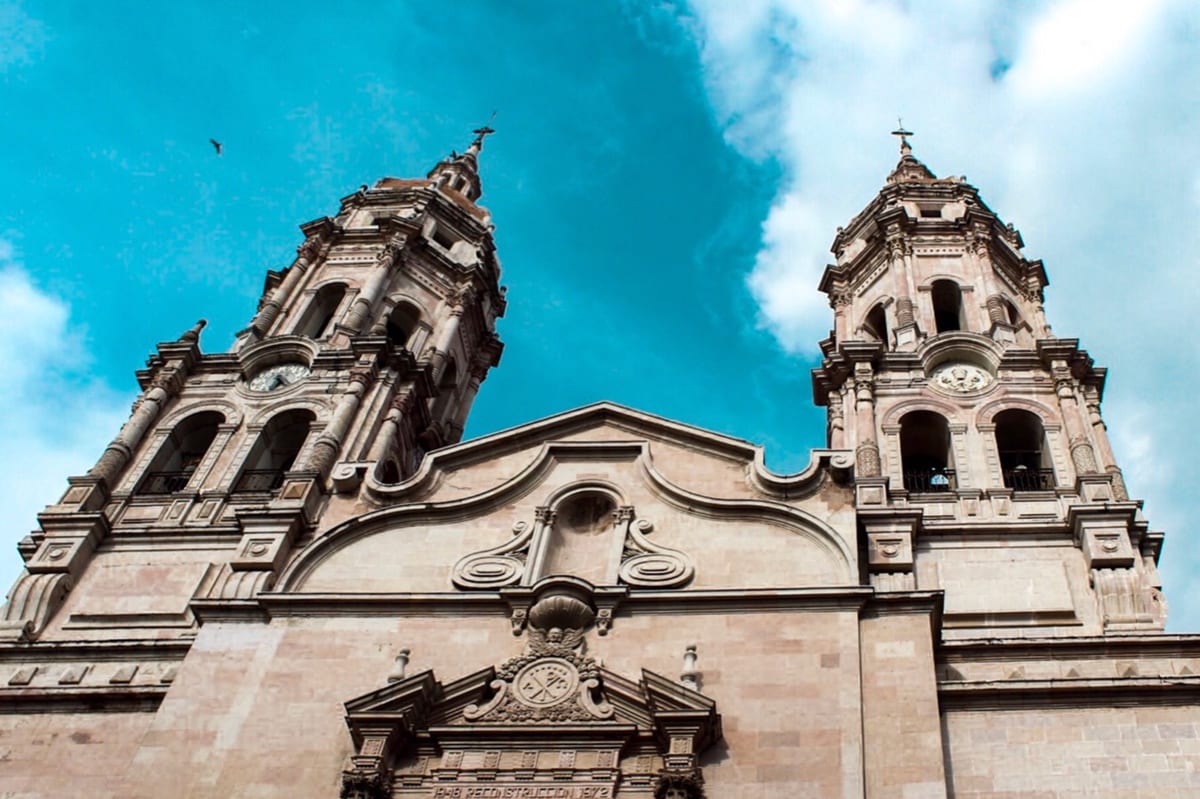
Parroquia de Santiago Apóstol (Sahuayo centro, Michoacán), Cesia31 (cesiaramirez), July 16, 2018 AD Cesia31 (cesiaramirez), Wikimedia Commons (Wiki Loves Monuments 2018 AD, Mexico; monument ID 09570) On February 7, 1928 AD, the two boys were locked in Sahuayo's parish church, where St. José had been baptised, which government troops were using as a prison and a stable. Fighting cocks belonging to his godfather, Rafael Picazo, were tied in the sanctuary to the stand for the Blessed Sacrament. In the night St. José killed the birds.
On February 8, Picazo came to the church in a fury, and a soldier struck St. José in the mouth and broke his teeth. That day the soldiers hanged Lázaro in the square in front of the church and made St. José watch. They left Lázaro for dead, but the cemetery keeper found him alive and got him out in secret at nightfall.
“La casa de Dios es para venir a orar, no para refugio de animales. (The house of God is for coming to pray, not a shelter for animals.)”
St. José Sánchez del Río to Rafael Picazo Sánchez, his godfather, February 8, 1928 AD -
February 1928 AD
A ransom he would not accept
The political chief demands 5,000 gold pesos for the boy; the boy asks his family to pay nothing and turns down every offer.
The political chief demanded a ransom of 5,000 gold pesos from St. José's family. St. José asked more than once that not a single centavo be paid, because he had already offered his life to God. His father raised the money and paid it, and the political chief kept it and still put the boy to death.
His captors pressed him again and again to change sides, and the political chief offered him a chance to escape. St. José refused every offer.
“My faith is not for sale”
St. José Sánchez del Río to his parents, when his family tried to free him from captivity, February 1928 AD -
February 10, 1928 AD
Sentenced to die that night
On his last evening the boy writes to his aunt that he will die that night, and soldiers cut the soles of his feet.
At about six in the evening of February 10, 1928 AD, soldiers moved St. José from the church to an inn they used as barracks. That evening he wrote to his aunt, María Sánchez de Olmedo, that he had been sentenced to death and that the moment he had long wanted would come at half past eight. He got word to another aunt, asking her to bring him Communion before he died.
Government soldiers cut the skin from the soles of his feet with a knife to make him renounce his faith. Then they drove him barefoot over the cobbled streets to the town cemetery, about six blocks from the parish church. On the way he refused to blaspheme God, and before his death he sang hymns to Christ the King and Our Lady of Guadalupe.
“¡Viva Cristo Rey y la Virgen de Guadalupe! (Long live Christ the King. … Long live the Lady of Guadalupe.)”
St. José Sánchez del Río to his captors, on the walk barefoot, February 10, 1928 AD -
February 10, 1928 AD
Death in the cemetery at Sahuayo
At the cemetery soldiers stab and shoot the fourteen-year-old with his mother beside him, and bury him without a coffin.
His mother was with him at the cemetery and stayed to the end, praying for her son. The officer commanding the government soldiers ordered them to stab St. José rather than shoot him, so that no shots would be heard in the town. They stabbed him many times, and the soldiers, who were obeying their orders unwillingly, were amazed at his courage.
Cardinal José Saraiva Martins later said that St. José spoke last words to his parents before he died. A shot to the head ended his life, forty-six days before his fifteenth birthday. His body was buried in the grave without coffin or shroud.
“nos veremos en el cielo. ¡Viva Cristo Rey! ¡Viva la Virgen de Guadalupe! (We will see each other in heaven. Long live Christ the King! Long live the Virgin of Guadalupe!)”
St. José Sánchez del Río to the officer at the grave, who asked what message he had for his father (the homily says his parents), February 10, 1928 AD -
1928–2016 AD
Beatified beside the man whose tomb he visited
Men rebury the boy in secret, pilgrims come to his grave, and a baby's healing leads to his canonisation in 2016 AD.
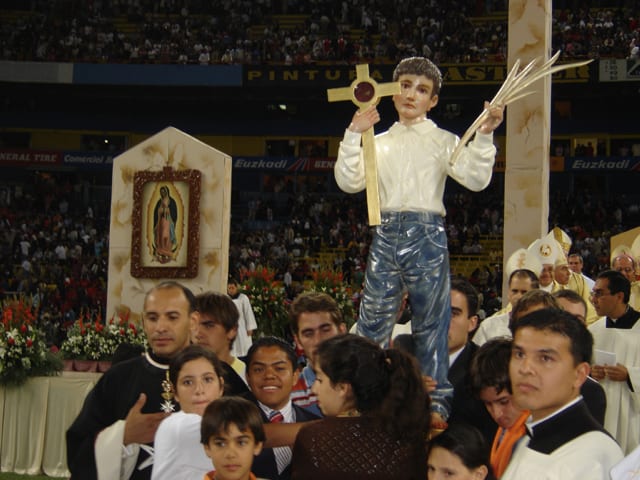
Josesancheza, Wdrdp, November 20, 2005 AD Wdrdp, Wikimedia Commons Late that night some men secretly dug up his body, wrapped it in a sheet and buried it again in the same grave. From the night of his death, Catholics regarded him as a martyr, and pilgrims came to his grave. On November 20, 2005 AD, the feast of Christ the King, he was beatified in the Estadio Jalisco at Guadalajara with twelve other martyrs, among them Blessed Anacleto González Flores, whose tomb he had visited.
A gravely ill baby, Ximena Guadalupe Magallón Gálvez, was about to be taken off life support when her mother, Paulina Gálvez Ávila, entrusted her to God and to St. José. The baby opened her eyes and went on to recover fully, and the Church recognised the healing as a miracle through his intercession. Pope Francis canonised him in St. Peter's Square on October 16, 2016 AD.


.jpg)


Pray with the Church
From the Collect of the Mass of his canonisation
The opening prayer of the canonisation Mass in St. Peter's Square, October 16, 2016 AD, as Pope Francis quoted it in his homily.
Create in us a generous and steadfast heart, so that we may always serve you with fidelity and purity of spirit
All 1 report on Saint José Sánchez del Río

About this picture
AI-generated image, in the manner of a 1930s reportage drawing in pen and ink with wash.