Saints Priest and Doctor of the Church · 1801–1890 AD
Saint John Henry Newman
Feast 9 October · Born 1801 AD, Old Broad Street, City of London, England · Died 1890 AD, Birmingham Oratory, Edgbaston, Birmingham, England
A London banker's son led a religious movement at Oxford, left it to become a Catholic priest, and was made a cardinal at seventy-eight.
Begin the life
In brief
Saint John Henry Newman, commonly known as Cardinal Newman, was born in the City of London on February 21, 1801 AD. He spent twenty years as a clergyman of the Church of England at Oxford before he was received into the Catholic Church in 1845 AD. Pope Francis canonised him in 2019 AD, and Pope Leo XIV proclaimed him a Doctor of the Church on November 1, 2025 AD.
-
1816 AD
A change at fifteen
In his last half-year at school, a fifteen-year-old undergoes a conversion to a firm Christian faith.
In the autumn of 1816 AD, St. John Henry Newman was fifteen and in his last half-year at his school at Ealing. One of the classical masters, the Rev. Walter Mayers, drew him into a serious faith, Calvinist in character at the time. St. John Henry Newman always counted that conversion the event of his life.
The same autumn he became convinced that God wanted him to remain unmarried. Reading a book on the prophecies, he also became sure that the Pope was the Antichrist. He went so far as to erase papal titles such as *Christi Vicarius* (*Vicar of Christ*) from a book of his.
“The reality of conversion, as cutting at the root of doubt, providing a chain between God and the Soul, that is with every link complete ; I know I am right. How do you know it ? I know I know.”
St. John Henry Newman, a manuscript book of 1817, 1817 AD -
1819–1822 AD
Failure, then Oriel
Worn out by study, he breaks down in his degree examination; seventeen months later Oxford's leading college elects him a Fellow.
His father, John Newman, a London banker, meant him for the law, and in 1819 AD St. John Henry Newman was entered at Lincoln's Inn. At Trinity College, Oxford, he read for an average of more than twelve hours a day for twenty weeks before his final examination. In November 1820 AD, not yet twenty, he broke down from overwork and missed the honours expected of him.
On April 12, 1822 AD, word that Oriel College had elected him a Fellow reached him while he was playing the violin in his lodgings. He answered the messenger briefly and went on playing. He always felt that day to be the turning point of his life.
“I am just made Fellow of Oriel. Thank God !”
St. John Henry Newman to his father, April 12, 1822 AD -
1832–1833 AD
Fever in Sicily
Travelling alone, he falls gravely ill with fever, then writes the verses Lead, Kindly Light becalmed at sea on the way home.
In December 1832 AD St. John Henry Newman sailed for the Mediterranean with his friend Hurrell Froude and Froude's father. In April 1833 AD the Froudes turned for home, and he went back to Sicily alone. At Leonforte, in the interior of the island, he fell so ill with fever that his servant thought he was dying.
Recovering at an inn one morning in late May, he sat down on his bed and sobbed, and when his servant asked what was wrong, he could only answer that he had a work to do in England. In June, becalmed in the Strait of Bonifacio on an orange boat bound for Marseilles, he wrote the verses Lead, Kindly Light.
“I have a work to do in England.”
St. John Henry Newman to his servant, sobbing at his inn as he recovered, May 1833 AD -
1833–1841 AD
The Tracts and the pulpit
Back in Oxford, the vicar of the University Church writes the pamphlets of a new religious movement.
St. John Henry Newman had been ordained a deacon of the Church of England in 1824 AD, and since 1828 AD he had been vicar of St Mary's, the University Church at Oxford. On July 14, 1833 AD, John Keble preached a sermon at St Mary's that St. John Henry Newman always counted as the start of the Oxford Movement. Within weeks St. John Henry Newman was writing pamphlets called the Tracts for the Times, the first dated September 9, 1833 AD.
Dean R. W. Church, his old friend, judged that without St. John Henry Newman's four o'clock sermons at St Mary's the movement might never have gone on. The authorities of Christ Church arranged their chapel services so that their undergraduates could not go to hear him. He later wrote that, humanly speaking, the years up to 1841 AD were the happiest of his life.
-
1841–1845 AD
The night at Littlemore
After years of doubt, he withdraws to a village outside Oxford and asks a visiting Italian priest to receive him into the Catholic Church.
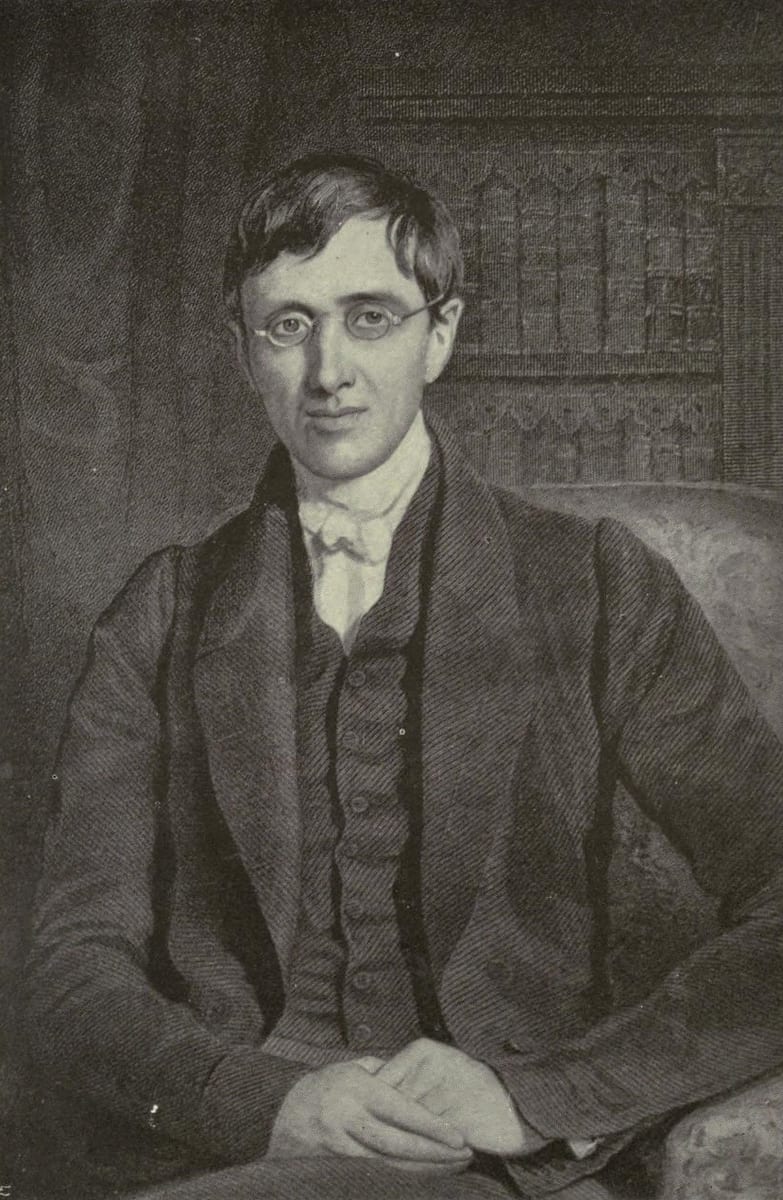
Portrait miniature of John Henry Newman (reproduction of the miniature, or of R. Woodman's engraving after it), Sir William Charles Ross (1794-1860 AD), sketched at Littlemore; the miniature dated 1847 AD by the DNB (1894 AD) Sir William Charles Ross (1794-1860 AD), Miniature in the possession of Henry Hucks Gibbs, sketch at Keble College, Oxford (DNB, 1894 AD); reproduction from archive.org In 1841 AD St. John Henry Newman published Tract 90, arguing that the Thirty-nine Articles of the Church of England could be read in a Catholic sense. Oxford's heads of colleges censured it, and anger spread from Oxford across the country. In 1842 AD he withdrew to the village of Littlemore, outside Oxford, to a life of prayer and fasting.
On the wet night of October 8, 1845 AD, Blessed Dominic Barberi, an Italian Passionist priest, arrived at Littlemore. St. John Henry Newman knelt at the priest's feet, asked for Blessed Dominic's blessing and made his own confession that night. On October 9, 1845 AD, Blessed Dominic received him into the Catholic Church.
“He does not know of my intention; but I mean to ask of him admission into the One Fold of Christ....”
St. John Henry Newman to a number of friends, October 8, 1845 AD -
1846–1849 AD
A priest in Birmingham
Ordained a Catholic priest in Rome, he comes home to found the Oratory in England and goes into a town struck by cholera.
In February 1846 AD St. John Henry Newman left Oxford, and he did not see it again for thirty-two years. In Rome, Cardinal Fransoni ordained him a Catholic priest on May 30, 1847 AD. He joined the Oratory of St. Philip Neri and opened its first English house on February 2, 1848 AD.
A year later the Oratorians opened their first Birmingham chapel in a former gin distillery in Alcester Street. When cholera broke out at Bilston in September 1849 AD, he went there with Father Ambrose St. John to help the parish priest. The two of them took the post of danger their bishop had meant for others.
“It is an awful thing, beginning so new a life in the end of my days.”
St. John Henry Newman to Henry Wilberforce -
1863–1864 AD
Answering the charge of lying
Accused in print of not caring for the truth, he answers with the history of his own religious life.
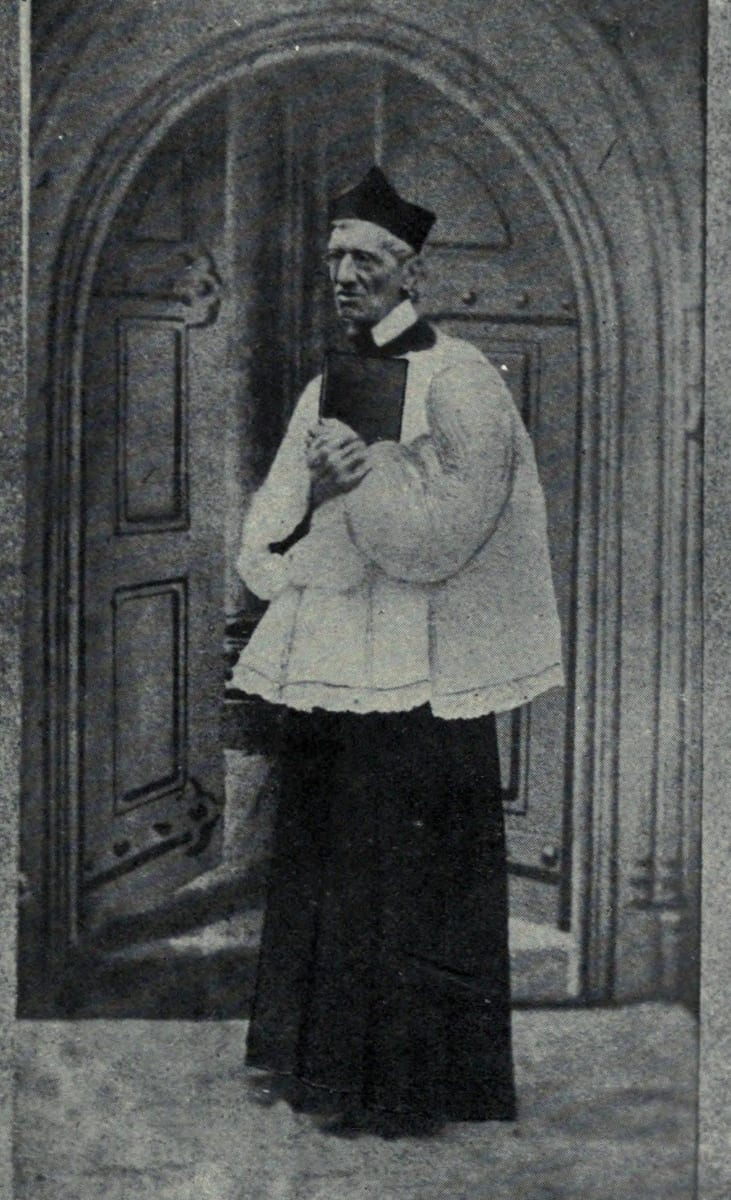
John Henry Newman circa 1863 AD (photograph), plate 'Portrait (about 1863 AD) — From a Photograph' in Wilfrid Ward, The Life of John Henry Cardinal Newman, vol. I (1912 AD), Unknown photographer Unknown photographer, Reproduction from archive.org (Ward, Life, 1912 AD) In January 1863 AD St. John Henry Newman wrote in his journal that he felt useless. A year later the popular writer Charles Kingsley accused him by name, in a magazine article, of undervaluing truthfulness. St. John Henry Newman, his biographer Wilfrid Ward writes, saw in the attack a chance to vindicate his whole career.
His answer, the Apologia pro Vita Sua (*a defence of his life*), came out in seven parts between April 21 and June 2, 1864 AD. It was a history of his religious opinions. He finished it on May 26, the feast of St. Philip Neri, and dedicated it to his brother priests of the Birmingham Oratory.
“I wish to be known as a living man, and not as a scarecrow which is dressed up in my clothes.”
St. John Henry Newman, deciding how to answer his accuser, 1864 AD -
1879–1890 AD
A cardinal at seventy-eight
Pope Leo XIII makes him a cardinal; eleven years later he dies at the Oratory in Birmingham.
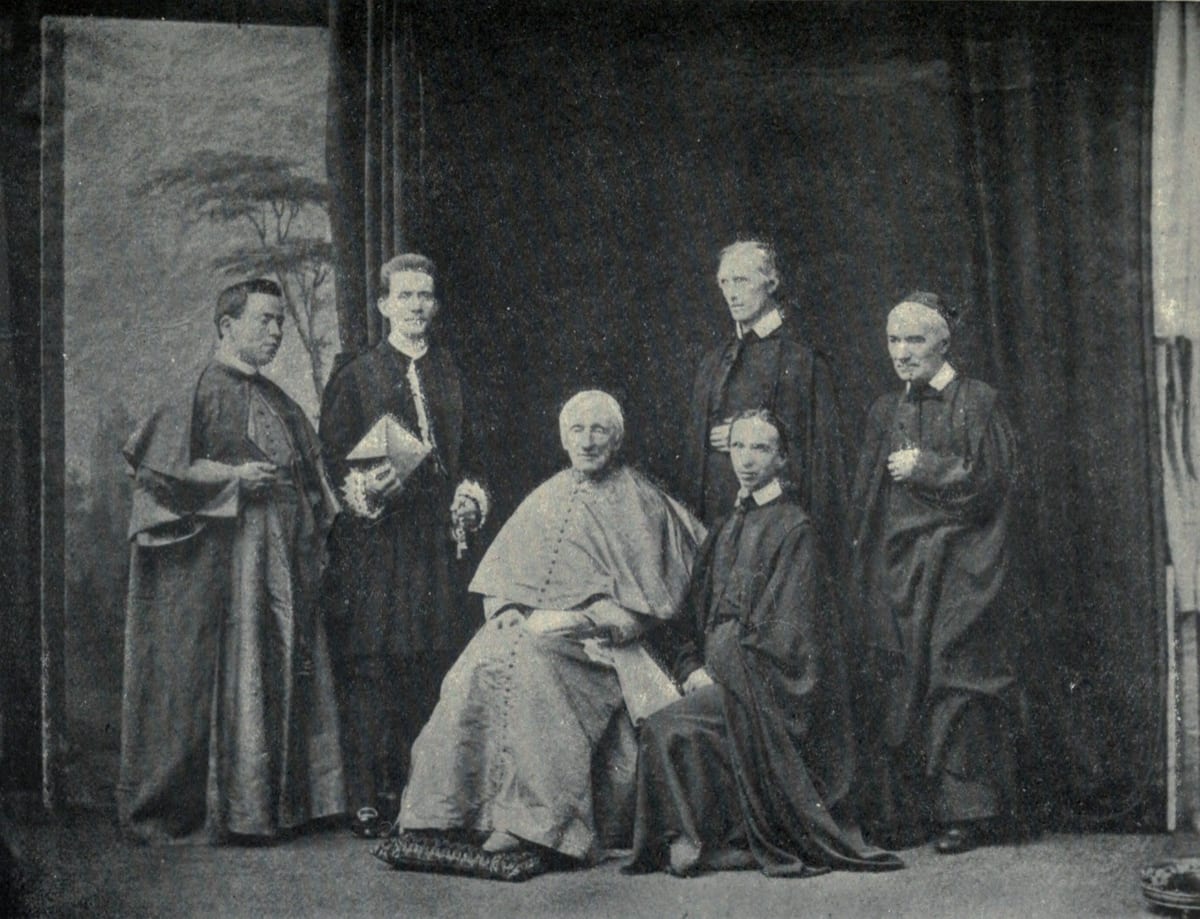
Cardinal Newman in Rome (plate 'Group photographed in Rome, in May 1879 AD'), Unknown (Rome studio) Unknown (Rome studio), Plate in Wilfrid Ward, Life, vol. II (1912 AD), facing p. 458; Wikimedia Commons In February 1879 AD Pope Leo XIII made known that he meant to make St. John Henry Newman a cardinal. The honour took St. John Henry Newman wholly by surprise. On May 12, 1879 AD, at seventy-eight, he was created a cardinal in Rome.
On August 18, 1887 AD St. John Henry Newman knelt before Bishop William Bernard Ullathorne, his former bishop, bowed his head and asked for the bishop's blessing. St. John Henry Newman died in his room at the Oratory in Edgbaston, Birmingham, on August 11, 1890 AD. He was buried at Rednal. In 2010 AD Pope Benedict XVI recalled that many thousands had lined the local streets as St. John Henry Newman's body was carried to burial.
“The cloud is lifted from me for ever.”
St. John Henry Newman to his brethren of the Oratory, on the offer of the cardinal's hat, March 1879 AD


Pray with the Church
A prayer of St. John Henry Newman
From a meditation St. John Henry Newman wrote on March 7, 1848 AD, printed in his Meditations and Devotions.
O Adonai, O Ruler of Israel, Thou that guidest Joseph like a flock, O Emmanuel, O Sapientia, I give myself to Thee.I trust Thee wholly.Thou art wiser than I—more loving to me than I myself.Deign to fulfil Thy high purposes in me whatever they be—work in and through me.I am born to serve Thee, to be Thine, to be Thy instrument.Let me be Thy blind instrument.I ask not to see—I ask not to know—I ask simply to be used.
All 5 reports on Saint John Henry Newman

About this picture
AI-generated image, in the manner of an English topographical pen-and-wash book illustration of the 1830s. No person appears in it.
Dying Hurrell Froude's face lights up as St. John Henry Newman says goodbye

St. John Henry Newman kneels before a rain-soaked friar to become Catholic

St. John Henry Newman resigns the Oxford place he wanted for life

About this picture
AI-generated image, in the manner of a pen-and-wash English book illustration of about 1900. No person appears in it.
St. John Henry Newman's father forgives the brothers after a Sunday quarrel
